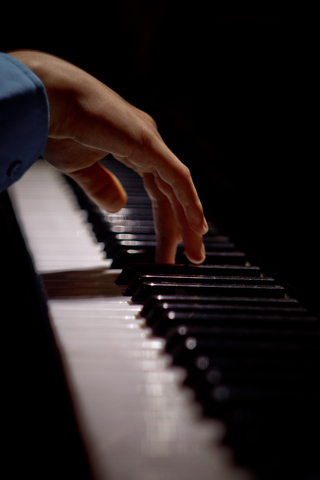
There is a common tendency to dissociate ‘technique’ and ‘musicality’. Technique is mechanical, while musicianship is expressive. However, I would posit that technique is merely the physical and mental means by which musicians reliably, consistently, and safely, communicate their understanding (some would say ‘interpretation’) of a piece of music to their listeners. As proof of this, there is often a moment in a pianist’s journey when they realise that sheer speed or volume alone is insufficient. The notes are accurate, the rhythm is steady, yet the music remains flat. It lacks heart, personality, or—to use that fraught term—’expression’.
For decades, we have wrestled with how to translate internal emotion into external sound. Too often, the search for expression leads to external exaggeration: the dramatic arm wave, the excessive head sway, the overblown facial grimace. We seek to put on a show of feeling, hoping the audience will connect the dots between our physical and musical performances. The inexorable rise of social media has not helped us in this regard, fostering a generation of pianists who, it seems to me, play primarily for people who watch music.
Yet, performance science and artistic history tell us that true expressive power lies not in theatrical display, but in the imperceptible: the refined, minute physical controls we term micro-gestures, and somatic micro-expressions. The battle for profound expression is won in the millisecond before the hammer strikes the string, or in the fraction of a second we hold a phrase before breathing.
The Scientific Proof of Subtle Touch
For years, many mechanical models insisted that the piano’s sound was dictated only by the velocity of the key—that the concept of a ‘pianist’s touch’ was purely a romantic metaphor. Scientific research has definitively closed that debate. High-resolution studies have proven that professional pianists can, and do, manipulate tone-colour or timbre mid-performance purely through subtle motor control, independent of dynamic level. (See, for instance, this article in the Proceedings of the National Academy of Sciences, or McPherson and Kim’s chapter in the book Music and Human-Computer Interaction, published by Springer.)
This means the colour of your tone—whether you achieve a bright, penetrating sound or a warm, dark resonance—is determined not just by how hard you press, but by how the key is prepared and depressed. Researchers identified five specific, subtle key movement features that link directly to perceived timbral qualities.
Think of this as acoustic micro-gestures. They include high-precision controls over the key’s acceleration just as the note sounds, or minute deviations in finger synchronisation that lend weight to a chord. The individual characteristics of your finger movements become your unique artistic signature. For the dedicated pianist, technical practice must shift from merely hitting the key to sculpting its journey. We are not just pressing switches; we are controlling complex kinematic mechanisms with millisecond precision.
Micro-Timing: the Unheard Architecture
‘Expression’ is profoundly temporal. If technique is about playing the notes at the right time, artistry is about subtly moving the notes away from that time, only to return to it.
Mastery of temporal micro-gestures involves the controlled, judicious use of rubato and agogic accents. Rubato—flexible rhythm most commonly associated with Romantic music, and particularly that of Chopin—involves stretching certain notes and compressing others, allowing the phrase to breathe and flow naturally, rather than metronomically. ‘Agogic’ accents, meanwhile, allow us subtly to lengthen or delay a note for emotional emphasis, guiding the listener’s ear without resorting to a sudden sforzando.
This kind of subtlety requires profound technical command. In complex repertoire, the ability to employ a subtle rubato is predicated on having achieved a technical level where the rhythmic complexity is fully internalised. The expressive choice must be deliberate, not a desperate attempt to compensate for strained coordination. By controlling these tiny fluctuations in timing, you craft the narrative and give the music its emotional weight. Even the split-second timing and depth of pedal depression is a vital auditory micro-gesture controlling texture.
Kinesthesia and Functionality
If the battle for sound is won in the fingertip, the physical self is the essential conduit.
This is the matter of somatic micro-expressions—those subtle bodily cues that genuinely reflect internal engagement.
When we observe performers who appear outwardly restrained yet profoundly moving (like Marc-André Hamelin), their expressions are often internalised. The slight tension in the face, the focused stillness, or the barely perceptible breath are often involuntary signals—genuine micro-expressions linked to deep immersion. Conversely, when physical movement is exaggerated, it usually signals a disconnect. The body becomes a stage prop. True, effective movement is functional. It serves the sound. Over-the-top bodily ‘expression’ is merely performative.
The micro-gesture of the body is the efficient transfer of weight. Proper, relaxed posture and alignment foster kinesthetic awareness, allowing the pianist to channel the weight of the arms through supple wrists and focused fingertips, supporting rich tone and clarity. A slight forward lean is not just for drama; it is a micro-gesture facilitating force transfer for a grand phrase. When the movement is functional, it enhances the sound; when it is purely visual, it distracts us from the lack of sonority.
Cultivating the Imperceptible
So how do we, as teachers, train our students to find this elusive subtlety? Or, indeed, how do we, as pianists, search for it in our own playing? It requires a shift in our focus:
- Use metaphor, not mechanics: Since complex motor kinematics are hard to grasp directly, teachers should use mental imagery and emotional language. If you want a ‘darker’ tone, imagine sinking your hand into a warm, heavy liquid. If you want a crisp staccato, imagine the snap of a twig or a quick, focused ‘pulling’ of the string. These metaphors act as cognitive shortcuts to achieve the necessary micro-gestures.
- Focus on release: True control requires coordination between active attack and immediate relaxation. Practise releasing the weight and tension instantly after the note sounds. This flexible state is critical for nuanced expression.
- Train discriminating voicing: Use fundamental exercises, like scales and arpeggios, to practise deliberately varying the weight applied to adjacent fingers. Focus on voicing the melody line over the accompaniment or the bass over the treble. This is high-precision weight discrimination—the ultimate micro-gesture of structural clarity.
- Listen and record: The crucial feedback loop requires developing perceptual sensitivity. Video or audio record your practice frequently. Do not just look for mistakes; listen critically for the nuances of colour and timing. Ask yourself if the subtle expressive choice you intended was actually heard.
The goal of expressive playing is not to draw attention to the performer’s physical turmoil, but to channel the music’s emotion with such clarity and control that the listener is transported, feeling the depth without observing the immense dexterity required. The path to mastery is quiet, refined, and hidden in the high-precision world of the micro-gesture.
Seek subtlety, and true expression will follow.