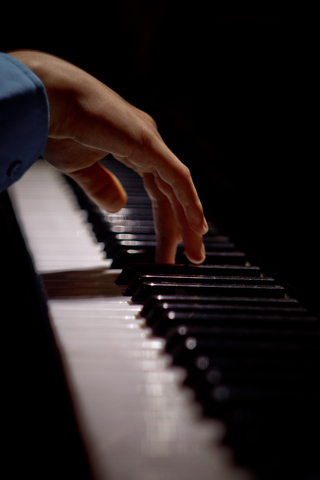
The Pianist’s Paradox: Why the Path to Speed is Paved with Slowness
In the world of piano pedagogy, there is a central, counter-intuitive truth that separates the amateur from the master: the path to effortless velocity is paved not with frantic, repetitive drilling at speed, but with meticulous, mindful, and often excruciatingly slow work. This concept presents a paradox for the aspiring pianist. The desire to play fast, to conquer the brilliant passagework of a Chopin etude or a Liszt rhapsody, creates an almost irresistible temptation to rush the learning process. Yet, generations of the world’s greatest pianists and pedagogues have arrived at the same conclusion, a piece of wisdom that has been passed down through distinct and often competing schools of thought. This is the foundational principle that ‘slow practice equals faster improvement, while fast playing equals slow improvement’.

This is not merely a quaint aphorism but an empirical discovery of a fundamental law of motor skill acquisition. Anecdotal evidence from the highest echelons of pianism supports this axiom. Liszt, a virtuoso whose name is synonymous with transcendental technique, was a noted proponent of separate-hand practice, a core component of deconstructive slow work. The celebrated pianist Jorge Bolet stated his conviction plainly: ‘I’m a very firm believer in practicing hands separately, and slowly. I’m never concerned about getting anything up to tempo until I really know the piece well’. This sentiment is echoed across pedagogical lineages, from the Russian school of Heinrich Neuhaus to modern teachers who champion the phrase, ‘If you can play it slow, you can play it fast’.
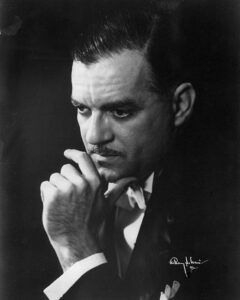
The practice habits of virtuosos often reveal a striking evolution. Many, like Claudio Arrau, spent colossal hours at the piano in their youth—up to 14 or more hours a day—only to distill their practice down to a far more focused and efficient two to three hours in their maturity. This shift does not represent a decline in work ethic but an increase in wisdom; a learned understanding that the quality and intelligence of practice far outweigh the sheer quantity. They discovered that the secret weapon for maintaining and refining their legendary technique was not relentless high-speed repetition, but a consistent return to the foundational act of slow, conscious practice.
The universal consensus among these masters, developed long before the advent of modern neuroscience, represents a remarkable instance of convergent evolution in pedagogy. They intuitively discovered a practical methodology for manipulating the very plasticity of their own brains to achieve optimal results. Scientific research into motor learning and neurobiology is now illuminating what they understood through feel, experience, and careful observation. Slow practice is not a tedious chore to be endured only by beginners. It is the master’s tool for forging an unshakeable technical and musical foundation, the very bedrock upon which to build true, sustainable virtuosity.
The Architecture of the Musical Brain: What Neuroscience Reveals About Slow Practice
To understand why slow practice is so profoundly effective, one must look beyond the keyboard and into the intricate architecture of the human brain. The process of learning a complex motor skill like playing the piano is a stunning demonstration of neuroplasticity—the brain’s remarkable ability to reorganise its structure and function in response to experience. When a pianist practises, they are not merely training their fingers; they are physically rewiring their own central nervous system. Playing the piano is a full-brain activity, engaging a vast network of regions including the motor cortex for movement, the auditory cortex for sound processing, the cerebellum for fine-motor coordination, and the prefrontal cortex for planning and memory.
At the heart of this rewiring process is a crucial biological mechanism called myelination. Every nerve fibre, or axon, in the brain acts like a wire carrying electrical signals. Repetition of a specific action—such as playing a C major scale—triggers glial cells in the brain to wrap that corresponding neural pathway in layers of a fatty, insulating substance called myelin. This myelin sheath acts like the rubber insulation on an electrical cord; it prevents the signal from leaking out and allows it to travel significantly faster and more efficiently. The more layers of myelin, the faster and more reliable the neural circuit becomes. This is the biological reality behind the colloquial term ‘muscle memory’. The feeling of a passage becoming ‘automatic’ or ‘in the fingers’ is the direct result of a well-myelinated neural pathway firing with incredible speed and precision.
Herein lies the double-edged sword of practice and the non-negotiable argument for slow work. The process of myelination is exquisitely efficient, but it is not intelligent. It does not distinguish between a ‘correct’ repetition and an ‘incorrect’ one. If a student practises a passage quickly and sloppily, making the same rhythmic error or using a tense, inefficient fingering ten times in a row, their brain will diligently begin to myelinate the neural pathway for that exact mistake. They are, in effect, building a high-speed, super-efficient biological circuit for an error.
This neurological fact explains the immense frustration students experience when trying to ‘unlearn’ a bad habit. The process is not a matter of simply forgetting; it is a direct, physical battle against an established, myelinated neural pathway. To correct the mistake, the student must now, through slow and highly conscious practice, build an entirely new, competing pathway for the correct action. During performance, the brain is faced with two options: the older, faster, more established ‘wrong’ pathway and the newer, weaker ‘correct’ one. Under pressure, the brain will almost invariably default to the more efficient, well-myelinated circuit—the mistake. The time a student thinks they are ‘saving’ by rushing through the initial learning phase is thus paid back with immense interest during the arduous and neurologically inefficient process of demolition and reconstruction. The true power of slow practice, therefore, is prophylactic. It ensures that the only pathways being myelinated are those of accuracy, control, and musicality. By adhering to what some call the ‘speed of no mistakes’, the pianist lays down a clean, correct, and robust neurological blueprint from the very beginning.
Furthermore, slow practice directly addresses the limits of our cognitive processing. Cognitive psychology introduces the concept of ‘chunking’, where our brains group small bits of information into larger, meaningful units to overcome the limitations of working memory. When a passage is played too quickly, the sheer volume of new information—notes, rhythms, fingerings, articulations—overloads the brain’s processing capacity. By slowing down, the cognitive load is reduced, allowing the brain to accurately process and consolidate small, manageable chunks of musical information, which is essential for effective learning and long-term memory formation.
The Mechanics of Mastery: Forging Technique with Microscopic Precision
While slow practice meticulously constructs the brain’s neural architecture, it simultaneously refines the physical machinery of the body. The development of a virtuosic piano technique is not, as is commonly misunderstood, a matter of building brute finger ‘strength’. Rather, it is the cultivation of profound neurological efficiency and the mastery of skeletal alignment. It is about replacing high-effort muscular tension with low-effort, gravity-assisted, and anatomically correct movements. Slow practice is the essential laboratory where this transformation occurs.
At speed, the brain defaults to pre-programmed motor patterns, which may be riddled with inefficiencies and tension. It is simply impossible consciously to monitor and adjust the complex biomechanics of playing while navigating a rapid passage. Slow practice, however, creates a temporal space for ‘hyper-awareness’. In this state of heightened perception, the pianist can shift their focus from merely hitting the right notes to analysing how those notes are being produced. They can consciously monitor their posture, feel the natural weight of the arm releasing into the keyboard, ensure the wrist remains flexible and aligned with the forearm, and observe the precise articulation of each finger. Crucially, they can practice the immediate release of muscular effort the microsecond after a key has been played, a skill that is fundamental to preventing the buildup of fatigue and tension.
This hyper-aware state is the very environment in which deliberate practice, as defined by psychologist Anders Ericsson, can flourish. Deliberate practice involves breaking down a skill into its smallest components, applying intense, focused concentration to improve each component, and using immediate feedback to make constant corrections. Slow practice provides the time and mental bandwidth necessary for this analytical feedback loop to function. The pianist can play a single chord, listen to the balance, feel for tension in the shoulder, adjust, and repeat—a process of refinement that is impossible at tempo.
The direct consequence of this mindful physical work is the prevention of playing-related injuries. The vast majority of conditions like tendonitis and repetitive strain injury (RSI) in pianists are not caused by playing ‘too much’, but by playing with faulty mechanics—static tension, excessive force, and poor alignment—repeated over time. Fast-only practice often encourages and ingrains these very issues, as the player tenses up in an effort to maintain control. Slow practice allows the musician to discover and internalise the ‘minimum tension necessary’ to execute a passage, fostering a technique that is not only efficient and powerful but also physically sustainable over a lifetime.
This process builds a deep and accurate kinesthetic memory—the memory of physical sensations. Rushing through a piece builds a kinesthetic memory of struggle, tension, and anxiety. Meticulous slow work builds a kinesthetic memory of ease, control, and release. The ‘strength’ that a pianist develops through this method is not the muscular hypertrophy of an athlete, but the profound efficiency of their neuromuscular system. It is a software upgrade, not a hardware one, resulting in the ability to produce a powerful, brilliant sound with the least possible physical effort.
The Slow Practice Toolkit: Actionable Strategies for Mindful Mastery
Understanding the ‘why’ of slow practice is the first step; applying it effectively requires a toolkit of specific, targeted strategies. ‘Slow practice’ is not a monolithic activity but a spectrum of specialised techniques, each designed to solve a different set of problems. The master practitioner knows which tool to deploy for each task, moving beyond simple repetition to a more sophisticated, diagnostic approach.
Ultra-Slow Practice: Forging Fast Reflexes
One of the most powerful and misunderstood techniques is ultra-slow practice. In this method, as described by pedagogues like Graham Fitch, the tempo between notes is taken to a ‘snail’s pace’, but the physical movements between the notes are executed with lightning speed. For a large leap across the keyboard, the hand moves from the last note of the old position to the first note of the new position as quickly and efficiently as possible, then waits. For a thumb-tuck in a scale, the thumb prepares its new position instantly after its previous note is played. This method isolates and trains the precise, ballistic reflexes required for high-speed playing within a calm, controlled, and error-free environment. It directly addresses the biomechanical requirements of speed, ensuring that the body is learning the correct ‘gait’ for fast playing, even while the overall pulse is slow. The legendary pianist Sergei Rachmaninoff was observed preparing a Chopin etude he already knew for a performance by practising it at a tempo of twenty seconds per bar, a testament to the power of this tool for maintenance and refinement at the highest level.
Hands-Separate Practice: Deconstructing Complexity
For music of any significant complexity, especially polyphonic works like a Bach fugue or pieces with a demanding accompaniment pattern, hands-separate practice is an indispensable tool. This technique is a primary method for reducing cognitive load. By isolating one hand, the brain is freed to dedicate all of its attentional resources to solving the problems of that specific part: securing the notes, organising an optimal fingering, shaping the musical phrases, and refining the technical execution. Many performance insecurities, particularly memory lapses, can be traced to an insufficiently thoroughly learned left-hand part. Practising the left hand alone until it is as secure and musically shaped as the melody ensures a robust and balanced foundation for the entire piece.
Mindful, Musical Slow Practice: From Notes to Artistry
It is a critical error to allow slow practice to become a sleepy, mechanical, and unmusical exercise. On the contrary, it should be a period of the most intense listening and heightened musicality. With the technical demands lessened by the slow tempo, the pianist has the mental space to focus entirely on the artistic result. This is the time to perfect the tonal balance within a chord, to shape a crescendo with exquisite control, to ensure every articulation is precise, and to experiment with subtleties of phrasing and colour. This approach transforms slow practice from a purely technical exercise into a deep musical meditation. Every note and every silence must be imbued with intention. This deep listening and focus on sound quality embeds the musical interpretation into the very fabric of the motor programme being built.
The Metronome as a Diagnostic Tool
While some pedagogues caution against its overuse for fear of mechanical playing, the metronome, when used intelligently at slow tempos, is an unbelievably helpful diagnostic tool. Its unyielding pulse provides objective, instantaneous feedback, revealing any rhythmic inaccuracies, hesitations, or uncontrolled rushing that the pianist might not perceive on their own. One particularly powerful technique is to set the metronome’s click to the shortest note value in a passage. For a run of semiquavers, for example, the metronome would be set to a slow tempo where each click represents a single semiquaver. This forces an absolute and microscopic level of rhythmic precision, building an unshakable foundation of rhythmic integrity that will hold together as the tempo increases.
From Conscious Control to Automatic Artistry
The ultimate goal of this intense, multifaceted, and deeply conscious slow work is to build a technical and musical foundation so robust that it can become entirely automatic. The meticulous process of forging correct neural pathways through myelination, refining a tension-free physical technique, and embedding deep musical understanding is what creates a reliable ‘autopilot’. During a performance, the conscious mind cannot—and should not—be occupied with the mechanics of which finger plays which key. It must be free to engage with the higher-level aspects of music-making: communicating emotion, reacting to the acoustics of the hall, and living in the artistic moment.
Slow practice is the rigorous, behind-the-scenes programming that makes this freedom possible. It is the deliberate, conscious control that ultimately yields subconscious, automatic artistry. Without this foundational work, the automatic pilot is unreliable, prone to error, and liable to fail under pressure.
This raises a critical question, however. Once this solid foundation is built, how does one safely and effectively transition from the world of slow, deliberate control to the world of high-velocity performance? As many frustrated pianists have discovered, simply turning up the metronome notch by notch is often not the answer. A different set of strategies is required to teach the body and brain how to operate at speed without sacrificing the control and precision that were so carefully cultivated. That is the subject we will explore next.